





DEPARTMENT HISTORY
Before 1993, Hong Kong lacked a formal university programme dedicated to training geoscientists. Despite a booming demand for engineering geologists, the majority of geological work was performed by geologists from Chinese mainland or overseas. Recognising the urgent need for local expertise, The University of Hong Kong (HKU) established the Earth Science Unit within the Faculty of Science in 1993, which achieved full departmental status by 1995. This marked the inception of the first Earth science curriculum in Hong Kong.
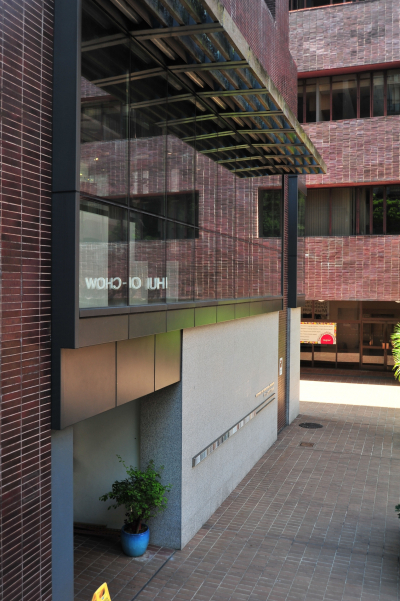
A pivotal figure in this development was Dr. Stephen Hui Sze-fun (許士芬博士), a distinguished mining and geological engineer. Dr. Hui was deeply committed to promoting earth sciences and fostering local talent. He was honoured with a Doctor of Laws honoris causa from HKU in 1980 for his contributions to the local mining industry. In 1977, he founded the Hui Oi-Chow Trust Fund to support scholarly activities in geology, which was supplemented in 1991 by the Dr. Stephen Hui Trust Fund established by his family. The Hui Family's generous endowment was key to the establishment of Earth Sciences at HKU.
The Stephen Hui Geological Museum (許士芬地質博物館) was established shortly after the establishment of the Earth Sciences Department, largely thanks to further donations by the Hui Family. The museum showcases Dr. Hui's extensive mineral collection, originally featured in Hong Kong's first-ever public mineral exhibition in the City Hall in 1975. Today, the Museum serves as a vital platform for promoting earth sciences and engaging the public.
The initial cohort of departmental faculty members included its founding Chair Professor and Head, John Malpas, and lecturers David Workman, Wyss Yim Wai-Shu, Min Sun, Jonathan Aitchison, and Lung-Sang Chan. The early curriculum emphasised a classical approach to learning core geology and introduced aspects of applied geosciences, allowing it to meet the education requirements for geologist Chartership by the Geological Society of London. Over time, the curriculum broadened to cover Earth Systems, Environmental Science, and Planetary Sciences, while retaining an intensive major for training professional geologists.
The department has consistently excelled in Tectonics, Petrology, Economic Geology, and Geochemistry, which now form part of the Solid Earth and Earth History research group. Our focus on Applied Geosciences continues to be of vital importance considering the highly urbanised setting of Hong Kong and associated geological and geotechnical problems. Global Change and Environmental Science have become increasingly relevant. With the new addition of Planetary Sciences, the department has broadened its expertise to explore other terrestrial bodies, such as the Moon and Mars.
The teaching and research team currently consists of over 20 full-time faculty members, along with about 40 research assistant professors/postdoctoral fellows and about 30 adjunct, part-time, and honorary members. The department has developed several profound research programmes in planetary sciences, responding to the growing need to extend the learning horizon beyond Earth. The renaming to Department of Earth and Planetary Sciences in 2025 reflects this growth, and the Department’s continuing strive for excellence.