





A JOURNEY TO THE CENTER OF THE EARTH
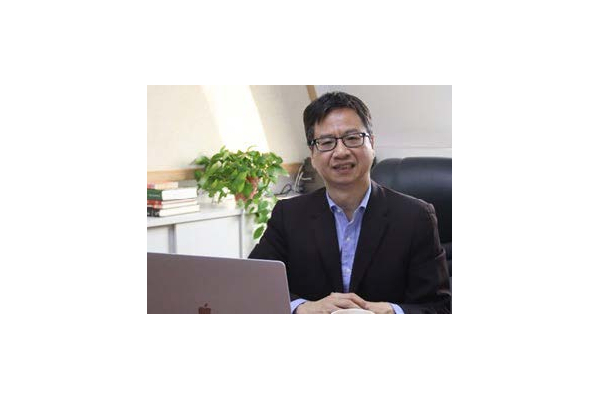
Xiaodong Song is Chair Professor at School of Earth and Space Sciences, Peking University. His research focuses on seismology and studies of the Earth’s interior. He received his B.S. in 1986 from University of Science and Technology of China and Ph.D. in 1994 from Caltech and did his postdoc at Columbia University. He was a tenured Full Professor at University of Illinois at Urbana-Champaign and had worked in several institutions in China as an affiliated faculty for two decades before joining PKU in 2019. He has published over 150 papers, including 13 in Science/Nature/Nature Geoscience/PNAS, on the Earth’s core, lowermost mantle, lithosphere, and big earthquakes. His work on the inner core differential rotation was named as a breakthrough of the year by Science magazine (1996) and one of the most important discoveries in 20th century by Discover magazine. He was honored with young scientist awards by the International Union of Geophysics and Geodesy and the Natural Science Foundation of China, the Chinese National Distinguished Scholar, the Solid Earth Distinguished Lectureship by the Asia Oceania Geosciences Society, and the First Prize of S&T Innovation of China Geophysical Society. He is the Editor-in-Chief of Earthquake Science, which he helps elevate to JCR Q1 in short years.
For additional information, please contact Prof. Guochun ZHAO, gzhao@hku.hk.
The dynamic solid Earth is driven by two internal engines: the growth of the solid inner core and the vigorous convection of the liquid outer core drive the generation and maintenance of the geomagnetic field, while the internal heat and that from the core drive the mantle convection, which in turn drives the plate motions and geological processes of the lithosphere. This talk briefly introduces our understanding and recent advances in deep Earth exploration—from the crust to the core—and explores the coupling interactions between the different layers of the solid Earth as a system.