





BIOGEODYNAMICS AND LONG-TERM SURVIVAL OF HUMAN CIVILIZATION
Seminars
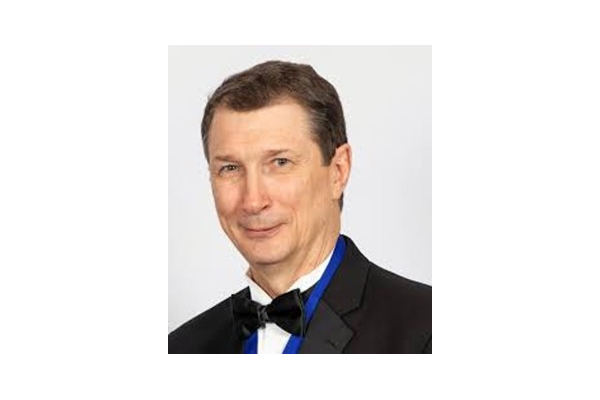
Prof. Taras Gerya received his PhD in Petrology from Moscow State University, Moscow, USSR, in 1990. Currently he is a full-time professor at ETH Zurich, Switzerland, a Fellow of the American Geophysical Union (AGU), and a Member of the Academia Europaea. He was conferred the Augustus Love Medal by the European Geosciences Union (EGU), and was elected to be the Chair of the International Lithosphere Programme starting in 2026. He is a globally distinguished specialist in numerical geodynamic modelling, whose research covers plate tectonics, planetary evolution and geodynamic numerical simulation. He is one of the earliest researchers worldwide to introduce numerical modelling into subduction dynamics studies. He has been repeatedly selected for the World’s Top 2% Scientists ranking and the global Top 100 Earth Scientists list. Up to now, he has published over 300 academic papers, among which more than 20 articles appear in Nature, Science and their affiliated journals. He has also supervised and cultivated numerous young research scholars.
For additional information, please contact Prof. Guochun ZHAO, gzhao@hku.hk.
It is becoming increasingly well understood that the Earth's interior and surface evolution is intrinsically interrelated with the evolution of its atmosphere, oceans, landscape and life. This understanding lays down principal foundations of Biogeodynamics - an emerging scientific field that explores the interface of geodynamics, geomorphology, climate, ocean and atmosphere sciences, biology and ecology in order to understand how the evolution of the planetary interiors, surface, atmosphere, ocean, climate, and life is coupled. Despite its strong scientific, educational and societal potential, Biogeodynamics has not been yet fully established as a new discipline. An intrinsically cross-disciplinary character of Biogeodynamics creates organizational, educational and scientific challenges due to the necessity of truly collaborative research and education to efficiently combine scientific knowledge, research tools and training approaches from the very different research fields (such as Earth Sciences, Biology, Ecology, Climate Sciences and Planetology), which evolved independently from each other. I will also review some recent advances in computational Biogeodynamics to show why and how the unique Earth's global evolution style - plate tectonics - is coupled to biosphere dynamics thereby accelerating life evolution and controlling biodiversity dynamics. Implications from Biogeodynamics for finding habitable Earth-like exoplanets and for the future dynamics and longevity of human civilization will also be discussed.