





FUTURE FRONTIERS IN GEODYNAMICS
Seminars
Semester 2
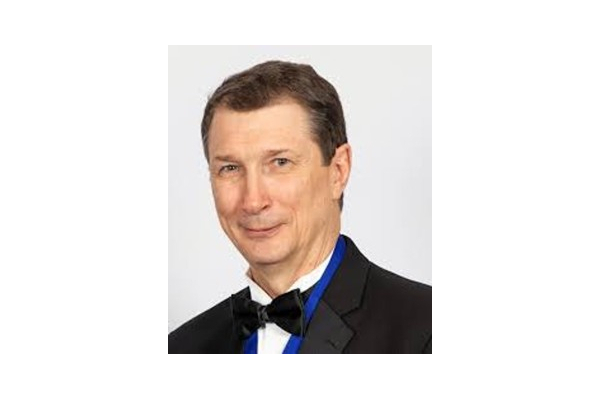
Prof. Taras Gerya received his PhD in Petrology from Moscow State University, Moscow, USSR, in 1990. Currently he is a full-time professor at ETH Zurich, Switzerland, a Fellow of the American Geophysical Union (AGU), and a Member of the Academia Europaea. He was conferred the Augustus Love Medal by the European Geosciences Union (EGU), and was elected to be the Chair of the International Lithosphere Programme starting in 2026. He is a globally distinguished specialist in numerical geodynamic modelling, whose research covers plate tectonics, planetary evolution and geodynamic numerical simulation. He is one of the earliest researchers worldwide to introduce numerical modelling into subduction dynamics studies. He has been repeatedly selected for the World’s Top 2% Scientists ranking and the global Top 100 Earth Scientists list. Up to now, he has published over 300 academic papers, among which more than 20 articles appear in Nature, Science and their affiliated journals. He has also supervised and cultivated numerous young research scholars.
For additional information, please contact Prof. Guochun ZHAO, gzhao@hku.hk.
Geodynamics is an actively expanding young quantitative science, which defined its mission very generally as introducing of physical-mathematical methods into traditionally observations-focused Earth and planetary sciences in order to understand and quantify origin and evolution of Earth and other planets. As such, this young science is not limited by any specific object or subject and widens its scope through time. This is a very natural process ('instinctive evolution') since human scales of direct observation are extremely limited in both time and space and since rapid progress of quantitative physical-mathematical and computational methods offers every day new and exceptional possibilities to explore sophisticated physical-mathematical models for understanding intrinsically complex natural processes. As the result of this 'instinctive evolution', new frontiers in geodynamics are (and always were) defined by its expansion toward other fields. Initially, Geodynamics mainly expanded towards Structural Geology and Tectonics. Currently, new Geodynamics expansion tendencies are clearly visible toward: Seismology, Geomorphology, Geochemistry, Petrology, Climatology, Planetology/Astronomy and Biology/Astrobiology. In this lecture, I will give some recent examples of this impressive expansion and outline future expectations and challenges.