





IMPACT RESETTING VS. CRYSTALLIZATION: USING IN SITU U-PB, PB-PB, AND RB-SR CHRONOMETERS TO UNTANGLE THE CHRONOLOGY OF LUNAR GRANITES
Seminars
Summer Semester
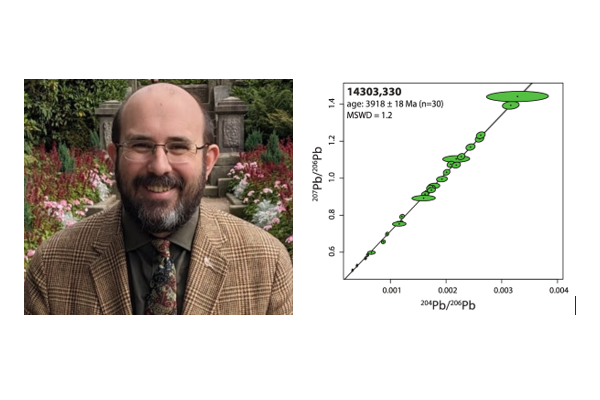
Dr. John Pernet-Fisher is a Research Fellow at the University of Manchester. He obtained his PhD in isotope geochemistry at Royal Holloway, University of London and then held a position as a postdoc at the University of Tennessee. His research focuses on lunar geochemistry and petrology. In particular, he is interested in how geochemistry can be used to constrain the origin and evolution of the lunar crust over time. This is important as our models of lunar crustal formation help shape our ideas about geological processes on the early Earth (and other terrestrial planets), a record of which no longer exists or is inaccessible.
For additional information, please contact Dr. Yuqi QIAN, yuqiqian@hku.hk
Understanding when lunar granitoids formed remains a long-standing challenge hampering efforts to place these rare rock types into the wider context of the geological evolution of the Moon. In this talk I will report in situ Rb-Sr, U-Pb, and Pb isotope systematics for lunar granitoid clasts from a range of Apollo landing sites. Our data indicate that dates derived from the Rb-Sr, U-Pb, and Pb isotope systematics recorded by plagioclase, K-feldspar, Ca-phosphates and glass most likely reflect impact resetting events rather than initial crystallisation ages. Currently, zircon U-Pb isotope dates provide the most robust constraints on the formation ages of Apollo sampled granitoids. This has important implications for popular proposed formation mechanism for evolved melts on the Moon such as the crustal underplating model.